
Why We Never Made Rubber Mulch, and Why That Decision Matters
A look at the hidden environmental and safety risks of rubber mulch, and our commitment to doing right by families and the land.
Over the years, people have asked us plenty of times: “Do you carry rubber mulch?” Our answer has always been no, and it is not because we could not. It is because we chose not to. That decision did not happen by accident. It happened because we did our homework, listened to our community, and made a call we still stand behind today.
Companies market rubber mulch as a miracle product. It lasts longer than wood mulch, it does not decompose, it cushions falls on playgrounds. At first glance, it sounds like a no-brainer. But the more you learn about what goes into rubber mulch and what it does over time, the picture gets a lot darker.
What rubber mulch actually is
Rubber mulch comes from shredded used tires, the same tires that roll down our highways for years, picking up road chemicals and breaking down under heat and pressure. When manufacturers grind those tires up and spread them across playgrounds, garden beds, and landscaped areas, they do not just sit there harmlessly. They bring everything baked into them along for the ride.
Tires are complex products. They contain synthetic rubber, carbon black, steel wire belts, zinc, lead, and a range of chemical compounds including polycyclic aromatic hydrocarbons (PAHs), some of which are known carcinogens. Shredding a tire does not neutralize those compounds. It exposes more surface area for them to leach out.
A peer-reviewed study published in the journal Chemosphere and published on PubMed found that rubber mulch leachate contains significantly higher concentrations of zinc than wood mulch, and that zinc levels increased with higher temperatures and lower soil pH conditions that are common in many landscapes.
A Washington State University research review concluded that toxic substances leach from rubber as it degrades, contaminating soil, landscape plants, and associated aquatic systems. It also cited Bucknell University research finding that rubber leachate from car tires can harm entire aquatic communities of algae, zooplankton, snails, and fish.
The USDA Agricultural Research Service, drawing on more than 20 years of research on zinc in soils and plant materials, concluded that ground or chipped tire material should never go into gardens or landscaping based on the zinc factor alone. The University of Illinois Extension has also documented symptoms of leaf yellowing, reduced tree growth, and increased tree mortality at sites where rubber mulch saw use, along with elevated zinc levels in soil tests.
- PubMedCharacterization and Potential Environmental Risks of Leachate from Shredded Rubber Mulches (Chemosphere, 2009)
- WSURubber Mulch Research Review, Washington State University Extension
- Illinois ExtensionContaminated Landscape Materials: Rubber Mulch, University of Illinois Extension
- USDA / Nature’s WayRubber Mulch: Beware, summarizing USDA Agricultural Research Service findings
It gets hot. Very hot.
One of rubber mulch’s lesser-known dangers is temperature. Rubber absorbs heat from the sun far more readily than wood or natural materials. Researchers have recorded rubber mulch surface temperatures reaching 150 degrees Fahrenheit and above under direct summer sun, hot enough to cause second-degree burns on a child’s bare skin.
Think about where rubber mulch sees its most common use: playgrounds. The very places where kids kick off their shoes and run around. The surface that should protect them from a fall can turn into a burn hazard on any sunny afternoon.
This heat is also a significant problem for plants sharing a landscaping bed with rubber mulch. Unlike natural mulch, which insulates soil and moderates temperature, rubber absorbs and radiates heat downward. Research cited by the University of Missouri Extension documents that this heat transfer can stress and damage the roots of delicate plants, altering the microclimate around them in ways that organic mulch never would.
Source: Rethinking Rubber: The Hidden Dangers of Rubber Mulch (citing University of Missouri Extension, 2022)If There’s Smoke There’s Fire
While both rubber and wood mulch are flammable, rubber mulch falls into a different category when it comes to fire behavior. A University of Nevada Cooperative Extension study found that shredded rubber burned at the hottest average temperature of any mulch tested, exceeding 630 degrees Fahrenheit, with flame heights averaging over three feet, and water could not put it out. Consumer Reports independently confirmed that rubber mulch burns hotter and faster than wood mulch and is significantly harder to put out.
Sources: Fire Safe Marin / University of Nevada Cooperative Extension study · Nature’s Way Resources: Fire Risk Related to Mulch (citing Consumer Reports)The metal wire problem, a hidden hazard in plain sight
Here is the one that stops most parents cold when they hear it: steel belt fragments.
Modern tires use steel wire belts woven throughout the rubber for reinforcement. When shredding tires to make rubber mulch, those steel wires break apart. Even manufacturers who advertise their product as 99.9% wire-free acknowledge that steel fragments can remain, meaning every ton of rubber mulch a playground receives may still contain pieces of exposed metal wire.
Consumer Reports tested rubber mulch samples and found pieces of steel and nylon in the product, recommending against its use on playgrounds. The WSU Extension research review cites this finding directly. The U.S. Consumer Product Safety Commission (CPSC) has also been conducting ongoing research into the health and safety risks of recycled tire materials that playground designers use as surfaces, a review that covers chemical exposure as well as physical hazards.
Industry sources acknowledge that even products advertised as 99.9% wire-free can still contain up to 2 pounds of steel wire per ton of rubber mulch delivered. That wire, described as high-tensile-strength steel used to keep tires road-ready, is not soft or flexible.
- WSU / Consumer ReportsWSU Extension review citing Consumer Reports findings on steel and nylon fragments
- CPSCU.S. Consumer Product Safety Commission: Crumb Rubber Safety Information Center
- Playground ProfessionalsRubber Tire Mulch: Hazard or Harmless?
The problem does not stop at installation. As rubber mulch breaks down over years of use and weathering, it can continue releasing wire fragments that never showed at the surface to begin with. Once installers spread the mulch, no easy screening method can catch them.
The “it does not decompose” problem
Manufacturers often pitch durability as rubber mulch’s biggest selling point. Wood mulch breaks down over a season or two. Rubber mulch sticks around for a decade or more. But that longevity is also the problem.
Natural mulch decomposes because soil organisms, bacteria, fungi, and insects break it down and return it to the earth. That process feeds the soil. It improves structure, adds organic matter, and supports plant life. Rubber mulch cannot do any of that. It just sits there, slowly leaching chemicals, heating up in the sun, and leaving nothing behind for the soil when someone eventually removes it.
And when it does finally need to come out? Rubber mulch is notoriously difficult to dispose of. Composting is not an option. Chipping it further is not possible either. In many cases, it ends up in a landfill, which is exactly where the original tires were heading before someone turned them into mulch in the first place. The recycling story does not have a clean ending.
Why we chose a different path
At JA Rutter, our business has always been rooted in this community. When we think about the products we put into the landscape, we think about what they leave behind. We think about kids playing in backyards, water running off into local streams, and soil that has to grow things for generations.
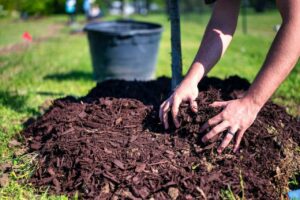
Natural wood mulch is not perfect. It needs to be refreshed. But it feeds the soil as it breaks down, it does not leach heavy metals, it does not become a burn hazard in July, and it does not hide steel wire fragments where children play. For us, the tradeoffs have always been clear.
We made the decision not to carry rubber mulch because it was the right one for the communities we serve. That has not changed. And if you are weighing your options for a playground, garden bed, or landscaping project, we hope this gives you something useful to think about.
We are always happy to talk through the right mulch or ground cover for your specific needs. Natural options have come a long way, and there is almost certainly a better fit than rubber for whatever you are working on.
Have questions about mulch, groundcover, or landscape products? Give us a call or stop by our yard on Old William Penn Highway. We are here to help you make decisions you will feel good about, for your yard, your family, and the ground beneath your feet.